Saturday, October 27, 2012

Pheasants: My Exotic Misconception

As I flip through magazines and scroll through websites I see an upland bird community that shares a fervor for hunting and the inevitable challenges that come with it. Men and women from New England to Oregon working hand in hand with friends and dogs to pursue birds in the depths of eastern hardwood forests and in the wheat fields of the mid-west. This community pursues upland bird species large and small but there is one, one bird that always seems to dominate the pages of these journals. A bird oddly enough that isn’t even native to our country but, as far as I can tell, no one seems to be complaining. This past week, I learned why.

For me, I’ve always looked at the pheasant as an exotic, a species that we fawn over and heavily manage and one which frankly, I just haven’t understood. Not that I don’t understand the bird itself, I mean, I understand that it wants to survive and reproduce, but what I have until this week failed to understand is why guys go so, forgive my language, bat-shit crazy over these things. I’ve never been to South Dakota but from the articles I’ve read you’d think these guys have pheasants on their minds from dawn till dusk. That everything else in their lives is secondary. It seems a little nuts if you ask me. But then again, I’ve only been pheasant hunting once before and while my cohort was successful in shooting down a rooster, I saw the event the same as any other hunt, nothing more and nothing less. So, having this in mind I headed out this week to try again and see what all the fuss was about.

Living in eastern Oregon there are few opportunities to hunt pheasants with the exception of the Ladd Marsh Wildlife Area. Nestled at the base of the Elkhorn’s the wildlife area claims to support a naturally reproducing population and as such, if you want to chase pheasants, it’s the place to go. I’ll admittedly say that I’ve been a little hesitant to hunt there in the past, somewhere along the way hearing that all their birds were farm-raised and released throughout the year. It was, in a sentence, a proposition which didn’t exactly appeal to me. However, after speaking with one of the fish and game staff biologists I learned that only once a year do they actually release birds and that is specifically for the early season youth hunt; the majority of the birds being shot or dying within a week or two, the typical farm-bird fate. So, feeling better about my venture, with a map in hand and some quick advice from their biologist, I headed out the door and went in search of my first pheasant.


The dog and I really couldn’t have asked for a better day. With a slow moving storm system looming overhead, the temperatures were cool and the winds, which are typically howling in that valley, were quite manageable. As I stepped out of the truck I only had a vague idea of how to approach these birds but I told myself to work the edges and let the dog go. I will also admit I was a little nervous, hoping that I would be able to identify roosters when they flushed up having gotten word that some males were still growing in their head plumage. But if I’ve learned anything, I knew if I was to be successful I would just have to trust my eyes.

Starting my walk it wasn’t long before I saw my first group of pheasants get up. They managed to fly off ahead of me into a “Safety Zone” but that was no matter, I was just happy to see some birds and as any hunter knows, seeing a few birds or a deer or a herd of elk makes all the difference in a day’s motivation. So I pushed forward, every minute loving the beautiful landscape, the Elkhorn’s to the west and the Wallowa’s to my east. With Farley running around I could very quickly see that he was focused, popping the occasional hen out of the grain fields, too far off to my dismay, but looking happy as could be. I knew we were onto something.

Farley performed beautifully, his tail indicating birds with precision, moving in on and busting up hens less than five yards in front of me. He seemed so focused. He was working like a machine, nose on the ground pushing forward at a pace like none I’d see before and I soon realized there were some distinct differences between this hunt and any hunt we’d done before. For most of our hunts we have been out in sagebrush, short grass environments where Farley has clearly been able to see far ahead of him. This of course has made deer and pronghorn likely fixtures for him but here, amongst these tall grains and grasses, the sight line was gone. And also absent from this hunt was what I have come to refer to as his kryptonite, jackrabbits. In turn, as I watched him early on I saw that without the other distractions he had only his nose to work off of and in these tall grasses with birds a plenty, I saw a bird dog I’ve never seen before; I loved it.


Within the first hour we had already seen over twenty hens and a lone rooster, each new flush teaching me something. I quickly learned that I couldn’t call to Farley as loudly; as far as I could tell, every time I did birds would launch out of some hiding spot way out ahead of me. I learned that this hunting would be lesson in speed walking; when the dog got on a trail he was a canine on a mission. I learned that I need not worry about identifying roosters as my eyes seemed to be trained just fine. I learned that pheasants, like feral pigs, make these sort of tunnels through the thickest vegetation in the middle of grass fields and underneath trees. I subsequently learned that my little dog, not known for his aggressive nature was, without hesitation thrusting himself into these dark abysses to find birds. And above all I was learning that pheasant hunting was muddy, aggressive, fast paced, and just some seriously good down home fun. This, I remind you, was all with the first hour.

Farley would end up tracking birds over great distances and I knew it was only a matter of time before I would have my chance. Oddly enough, that chance came about more by a bird’s confusion then anything I did. As I moved through a thick patch of chest high grasses a young rooster flushed up ahead at about 30 yards and as he began flying directly towards me I thought to myself, “Is this really happening?” But the question was fleeting and I shouldered my gun, pulled the trigger, and dropped my first bird. The excitement was tangible and Farley and I were happy to be kneeling next to my first pheasant, a beautiful young male.


The day would progress and Farley would continue to work me hard. So hard in fact that I had to stop him on multiple occasions to give my legs some rest. His pace was brisk, his pattern, methodical, and I was seeing a bird dog that had most certainly stepped out of the in-training stage to become a full on focused bird machine. Many times throughout the afternoon he worked himself into the thickest of grasses, tail moving furiously, and within seconds a hen would make her way out into the grey sky. Every time was fun to watch and every time my impression of pheasant hunting began to change.

I was able to bag two quail along my walk but it was at the end of the day that I reinforced two lessons that define the Haines Hunters and perhaps many other hunters out there: don’t stop hunting until you are at the truck and follow your bird after the shot. This proved truer than ever as the clouds darkened.

With nearly seven hours under my belt and less than 200 yards to my truck I broke one of those important rules and threw my gun over my shoulder. Although it was still loaded I knew, just as any other bird hunter knows, that shouldered guns don’t kill birds. And as fate would have it, the little dog, working his tail off until the day’s end, busted an adult rooster out from a small tree thicket, just out of sight. As I looked up the rooster was well overhead, almost directly above me and throwing my gun back into my hands I looked down my ribbing and shot. The bird however, kept going, and learning from my experiences earlier in the day, I ran out to see where he was going. I had learned at this point that while pheasants flush hard they don’t flush particularly far. As such I tried to spot where the rooster landed and having a good touch down point in mind I called the dog over, praised him, and quickly set off in pursuit.

Moving into tree line I had marked in my head I began to weave back and forth, waiting for that inevitable eruption from the grasses but the eruption that I heard would end up being that of a very different kind. As I turned over towards a large commotion in the brush I looked down to see none other than Farley backpedaling out of a thicket with the rooster in his mouth. “Holy shit, my dog just caught a pheasant”, I thought to myself!  And wanting to quickly reward him I reached over to take the still live bird and finished it off. I was ecstatic! Did that just happen? And that enthusiasm would continue upon inspection of the bird.

As I looked the bird over I realized that the reason my dog had been able to catch him was that I had broken his leg when I shot and in that moment, I very simply reinforced my two basic lessons. I reinforced that putting the gun over your shoulder has never made anyone in history a more effective bird hunter and it reinforced that all the work and time the little dog and I have put in has been worth it. It also reinforced that if I hadn’t run to see where the bird landed I never would have known where to go and if not for the dog I might have walked right past him without ever knowing he was there. That type of partnership is why we go out.


At the end of the afternoon perhaps the most important thing I took away was that my views on pheasant hunting have changed dramatically. Pheasant hunting is challenging, it’s hard work, it’s dirty, and it’s definitely fun. I came home from that hunt smiling ear to ear and the dog, completely exhausted, was instantly asleep on the drive home. I had bagged two roosters and a couple quail, the collective providing me with arguably the most fun I have ever had on a bird hunt. Overall I saw over 30 pheasants and simply put, it was just damn exciting.

I drove away from that hunt with nothing but great memories and as I sit here tonight I have birds in the cooler and a chance to let my legs recover. With fresh snow falling outside I can’t imagine that this day could have gotten any better and now I, like many South Dakotans, go to bed not counting sheep but counting pheasants.


Friday, October 19, 2012

Drought, Birds, and Money

Working my way through one of my favorite bird hunting spots I felt that somehow this year was different. That unlike the previous years birds were not flushing up from their usual hangouts and that despite my best efforts to find new sign I was coming up empty. Even the brown dog, jumping out of the truck as if he’d just sucked down one of those high energy drinks, was soon looking at me as if to say, “Hey, where the hell are all the birds?” Beginning to ask myself the same question I bent over to look at the ground and as I examined the grasses I started to realize that my fears from the summer were coming to fruition. That the birds, along with the moisture, had gone away some time ago.


The drought and dry season that devastated the entire Midwest and extended itself over into Oregon was now showing its colors. It had first played a role in my deer season and I could now see that it was taking a hold of my bird seasons. Not a good sign. Oddly enough, before this past month the effects of the dry seasons were only seen in small doses. Living so close to the mountains and having reliable river flows through our county this area was kept under the relative cloak of normalcy. Only our fire conditions mimicked the Midwest which, in and of itself caused many difficulties. But now, as I’ve headed out to bird hunt and enjoy my fall I’ve found myself seeing what the lack of rains really did to our rangeland.

It has been several weeks since our opening weekend and I have had little to no luck on either of my outings. With such success on my grouse hunts earlier this fall I had the silly notion that I would pick up right where I left off last year. Wrong. As I walked around on opening day I saw not only a plethora of hunters out which was odd, but also a very different landscape than the previous year. A landscape, that due to job and financial difficulties for me, I had not been out to in some while.

Walking the landscape I could see the damage our rangeland had to endure. A lack of water not only stressed our native grasses but the invasive weeds that intermingle their way through our countryside had taken full advantage of the stress; finding a way to survive where others could not. And while there were many native grasses that did make it through the season, much of the green sprouts utilized by upland birds at this time of year were nowhere to be found. It was in a word, depressing.

To top it off I can only imagine the strain young broods will have likely had to endure and while I really have nothing but my general knowledge to go off of, I would assume this was a tougher year than normal. On the other hand, that does not mean that every brood was decimated. There are very likely other broods that did succeed and as such, I believe that given the right landscape and conditions, there are most certainly areas out there holding the birds that I seek. Now the challenge becomes finding those areas, evaluating the habitat, and changing my search parameters.

If there is one thing I have prided myself in over the years it’s my ability to find those areas. To bounce from here to there and begin to cue in on the smaller things in life, or in this case, a bird’s habitat. But this year I find myself in the other unfortunate position of being squeezed by money troubles harder than I have ever been squeezed before and in a time when I should have put in at least half a dozen hunting days in I have been limited to two, having but one bird to show for it.

Part of hunting is getting out, exploring new locations, and marking them down on your map for future reference. Sort of a way to create a running tally of birds seen during which months so that heading into the next season, that same map, posted up on your wall, gives you detailed information about what you saw and where. And while I am still young and remember most of these things off the top of my head I know and understand that it will not always be that way. So, by developing this habit now I may in fact provide myself with some discipline later on in life…or at least one would hope.

However, as I mentioned, money troubles have made life difficult for me and this means that from here on out my decisions will have to be much more map based as opposed to driving around and looking at the area with my own eyes. Not really the best way to do business but, that’s just the way it is.

I will concede however that some of these spots did not really heat up for me until the first week in November and we are admittedly, a few weeks away from those days. So I keep up hope and face the upcoming challenges with excitement and trepidation, never really knowing what I’ll find myself in should I arrive at a new spot. But on the bright side, this is how we learn, how we find those spots that no one else has tried and as the markups on your maps continue to grow we know that when another dry season comes around, our chances of early success will be improved.

When all is said and done I welcome the challenge and with a full season of grouse hunting already under my belt I don’t feel quite as pressed to be out every day. However, soon enough, with the fall winds blowing in from the north, I’ll have to begin sacrificing home needs for gas and practical life purchases for shotshells. A tough move but above all, I consider myself a bird hunter and I can’t let a little thing like money get in the way of me and the dog getting out into the sagebrush.

Perhaps that’s wishful thinking. Even optimistic. Glass half full. Ah, I’ll keep telling myself that.


Tuesday, October 9, 2012

Deer Disappointment on Mt. Emily

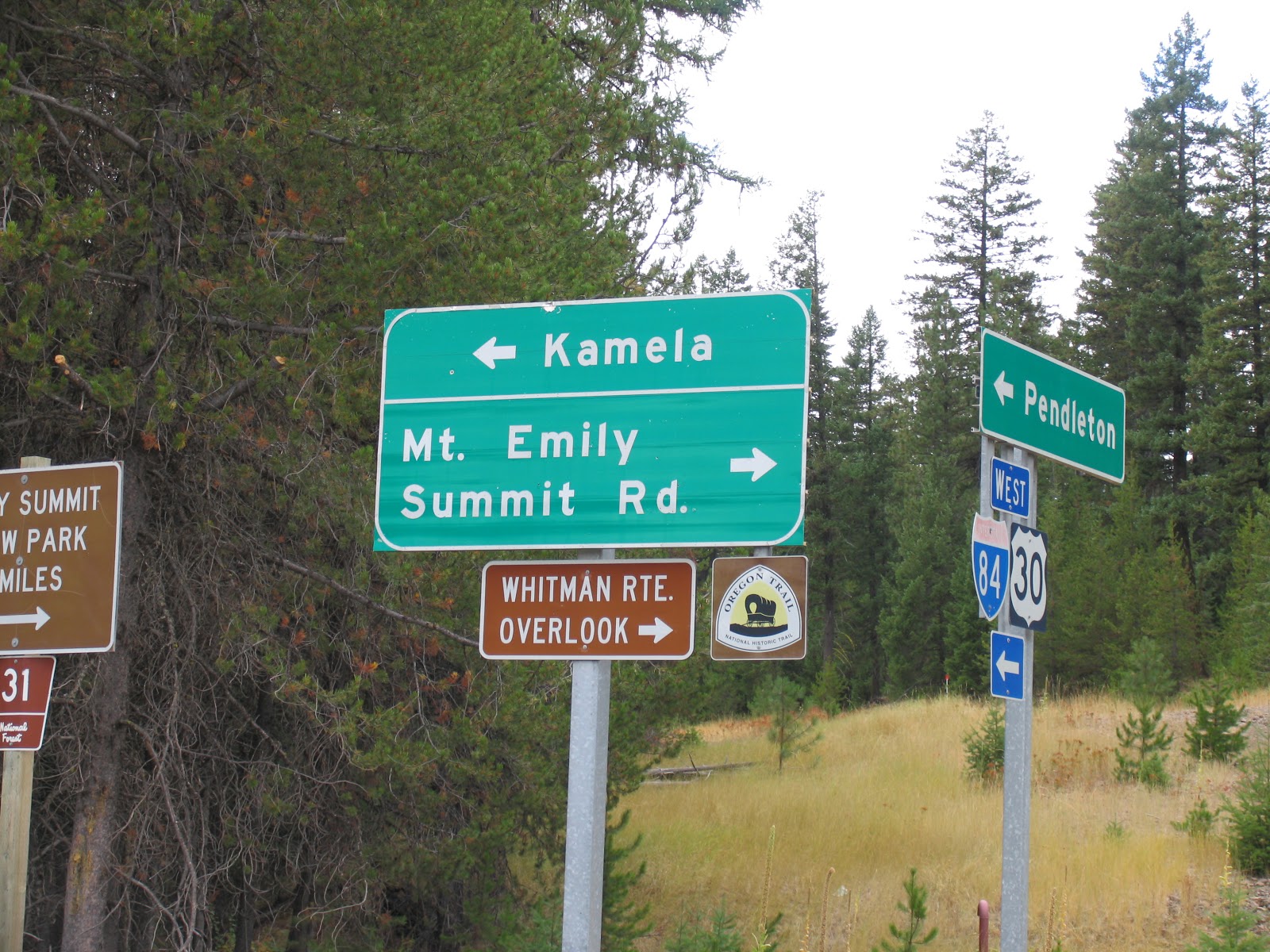
With the dust kicking up behind the truck and our campsite in my rearview mirror I began my descent down Mt. Emily. The hour drive home ahead of me, all I could do now was turn on the radio and reflect on the weight and disappointment of not bringing back my first deer. I had pushed up the mountain with hopes beyond words and dreamed of my encounter in the early morning mist. I had thought many nights about how the weekend would unfold but, as it goes and as the name implies, hunting is never easy and alas, I left with nothing and everything.

For me, what I’ve wanted really above all else, beyond taking the shot, is to have the opportunity to put an animal on the ground and clean that animal with Mike or James. I’ve wanted to experience that, learn from it, and commit those images to memory. I’ve wanted it so that I can take those mental pictures with me down the road that is my hunting life, building a foundation for years to come. I can still remember our trip to Montana when Mike first showed me how to field dress an upland bird. It was spell-binding watching his knife move with ease and efficiency and since that time I have cleaned every bird in the exact same way; all the while having others telling tell me that it’s easier to do it like this or maneuver it like that. But I’ll take the words and movements of a wily, weathered bird hunter over theirs any day.

Speaking with James in my driveway this past weekend I realized that what I wanted was not so far from what he himself had wanted many years ago, traveling with Mike into deep drainages and over high mountains to get the very same experience. To learn from a man who had done it his entire life and to pick up on the minute details that can only be taught out in the woods. And as the world turns James would eventually experience this for himself but he also, as mentioned in the past, took the initiative and found a way to do it without Mike’s help. He found a will to push himself and a way to put together the collective knowledge he had to get the job done. It seems for me that this was not my season, not quite my time, but with a little luck I will live many years into the future. I will walk this earth and walk out into the mist of many more cold, early mornings and with those years will come many other chances to shoot a deer, more chances to learn the process first hand.

I should note that despite warm weather and some long days with deer seemingly taking the form of ghosts, I was privy to one of the wonders of our eastern Oregon forests and that was to see bull elk in all their magnificence, bugling across the mountain, with antlers growing to incredible lengths. It was something I had never heard or seen before outside of an elk farm or feed site, and they were simply put, spectacular.

On the second day of hunting I had seen my first big bull smash out from a thicket deep in the canyon below me and as he rose onto the adjacent hillside I could see his massive weight carry over the hill. In seconds, with an amount of ease and power we as humans will never know, he was gone. But it was during my fourth day on the mountain that I got my first real up close encounter with a bull and I can tell you as I sit here today, I was not disappointed:

With a momentary pause above the vast drainage I could hear an elk bugling far below. His call was deep yet crisp and I could tell from the volume he was some distance off. Standing there, the canyon seemed to act almost like a channel to funnel the sound, playing like a melody to my awaiting ears. I listened for several minutes and the call continued, uninhibited and unrivaled. Unable to force myself to move on I stood still, gazing out over the trees but then, like written in a novel, I heard a loud bugle ring out and this time, it was much closer. As my head snapped to attention I could just see a shape through the trees. I squinted to adjust my eyes and then, across the drainage, with the morning light exposing his silhouette, I found myself closer to a bull elk than I had ever been before.

The shades of brown across his body were deeply defined by his muscles and pure size, forming the image of a forest giant. His antlers were long and traveled the length of his back, sporting many tines, branching out above his body. They were also shades of brown, painted together with auburn, chestnut, chocolate and tan. As he reared his head back  and let out another loud bugle I could see what it was he had his eye on. A group of cows were making their way down a trail in front of him and I could begin to see the scene unfold. Following in their tracks, like any bull would, he was not long to follow and as he bugled again I watched the dance play out with great joy. I could hear the thunderous stomp of his hooves on the ground and while I could not feel the actual vibration below me, the sounds were enough to make me feel as if I was standing right next to him. He pushed down the game trail in quick pursuit and it was then that all my other cares were lifted and I remembered distinctly why I had travelled to this place.
Hunting and being successful brings one great joy. It is the culmination of practice and hard work but success, as many before me have clearly said, it not the only reason we hunt. I saw a scene unfurl before my eyes that I would never had witnessed had I been home on my couch. I saw a monster buck disappear into the woods on our first day out that I would have never known was there and would go on to put in hiking days from sunrise to sunset, pushing myself to the extremes of fatigue. I may not have had the opportunity to sit next to a deer with James and field dress the animal but I enjoyed myself. I walked the woods in search of deer and for the many out there who droves their vehicles up and down the roads hoping to shoot something from the hood of their truck, my experience meant that much more. And in the end they may have brought home a deer and a story but I was able to bring home a memory. Hopefully someday, with more seasons underneath my belt, I’ll bring home both.


Sunday, September 16, 2012

Sage Grouse and Fall on Steens Mountain

With the last lamp in my house extinguished my trailer sinks into a deep shade of black and the stars begin to illuminate the universe above. The windows are cracked, a cool breeze sweeps across my uncovered arms and my hair instantly stands at attention. It is the second night in the past week that I have become keenly aware that the shift to fall is now very real. Soon the images of green wheat fields and clouds of road dust will be replaced by shades of reds and yellows, by pumpkins and ghoulish monsters. Soon the woods burning stoves that are the heart of our small town will fill the midnight air with a hazy smoke, painting the sky hues of white and grey. It’s by far my favorite time of year, a time when our global climate is drastically affected by the ever changing angle of our earth to the sun. But I go too far, for this blog is about hunting, not astronomy.

This past weekend was the onset of fall and it was the first time I truly felt the season’s change. Sitting in camp, surrounding by aspens up on Steens Mountain, I knew the time had come. It was perhaps one of the most comfortable, perfect nights anyone sleeping below the stars could ask for. Cool temperatures enveloping you from all sides, a light breeze moving through camp like waves on the sea, and a sky so filled with stars the idea of counting all of them seems silly and utterly overwhelming. And it was this night in particular that was the setting for what we really came into the wilderness to do, the real motivation behind our excursion, and that was to hunt sage grouse. A magnificent bird that not only symbolizes what the west once was but which also characterizes the ongoing struggle between the humans and wildlife. But, just like this blog isn’t about the infinite cosmos above, it’s also not about politics, and therefore, I again, come back to what this blog is about, and that, is hunting.

Because our trip encompassed many days and many beautiful landscapes I’ve struggled over the past week to put down the experience in writing. I mean, what defines a hunt? What defines an adventure with friends? How do we take all the parts that make these weekends so special and summarize them? I guess, I don’t know. I suppose the only true conclusion I could come up with is that you can’t. You can’t summarize them, the story must simply be told. It must be told either in its entirety or you can pick out moments; moments and more definitively, images, which will stick with you for the rest of your life. A mental picture album if you will. Because no matter how much I write or how many pictures I have taken, it is those pictures that will remain with me forever. Those images you carry with you, the ones you tell tales about, each one having its own unique narrative.


O O O
 
PART I:
 
As the sun fell towards the horizon and moved ever closer to the sagebrush I bathed in the cool air breeze, a welcome relief from the days early heat. James and I, along with our friend Laci, had been hunting throughout the morning and after some recovery time back at camp we had set out for the afternoon. It was during that time that I would enjoy the first of two distinct moments, or images, that would define our trip and our pursuit of grouse.
 
Having searched high and low through shrubs and grasses I had already snagged my first bird of the day and from there on the afternoon held a certain degree of confidence for all. We traveled the range, hiking in and around rolling hills but the only things before us were cows and habitat that was less than promising. It was then, after returning to our truck and heading several miles down an old, worn out two track that we once again came across the bird we were looking for. Out ahead of us, just making her way out of the remnants of the road was a hen grouse, eyeing us and then quickly loosing herself in the brush. We looked around and could only smile as we had been out on our boots all day only now to come across these birds, ironically, face to face just ahead.
 
For Laci, this was her first true immersion into an upland bird hunt and it was a moment we had been waiting for. A moment when there were known birds in the area and the likelihood of flushing up a group of grouse was almost certain. So, with James and I bringing up the rear we sent her out ahead of us to take lead; all in hopes that the hen and as of that point, unknown number of birds, would flush up right ahead of her. As it turns out, it couldn’t have gone down any better.
 
With Laci out ahead I called to Farley, who, like us, was most certainly aware of our proximity to birds. I let him loose and the hunt was on. As he searched through the crowd of shrubs, grasses, and forbs, the anticipation of what was about to happen had me almost too excited for words and then, like lava bursting forth from a volcano, the grouse began their exodus and the landscape came alive. But it was the first bird to flush that made the moment I would remember, a moment that would serve to reinforce the iconic image of upland bird hunting in my head.
 
As the first of the group thrust out of the sagebrush I immediately saw the silhouette against the bright blue sky. The bird, lifting itself above the fray like a mallard from a lake, powered itself into the air and I could simultaneously see Laci raise her shotgun. Then, a girl new to upland bird hunting forced back the trigger of her shouldered firearm, conjuring up images of Annie Oakley, and a crack broke out across the mountain. With no fluttering and no question, the bird crumpled over and dropped from the sky. The bird was down and I could only imagine the joy that resonated through her body.
 
The landscape would fully erupt in the seconds to follow with birds flying every which direction but that moment, the moment when Laci took down her first sage grouse almost seemed to stop time. It almost seemed to define the scene. In fact, it couldn’t have defined it any better. One shot was fired, a bird was down, and the inevitable smile of success was soon to follow.
 
 
PART II:
 
As we kicked the dirt and continued to encourage the dog the days hunt continued on. We retreated to the truck for a quick break and then began weaving ourselves in and out of the thick understory. And as it would turn out, within an hour of our previous encounter we would find ourselves once again in the midst of birds, this time by complete surprise.
 
During the shootout that left Laci with her first bird I had shot my second grouse and was now changing my role from hunter to photographer; a role that I readily welcomed as I have been taking photographs much longer than I have been hunting. But this new role came with some challenges, first and foremost, making sure that should there be another group of flushing birds, I was not in the line of fire. So I stood back, snapped away, and tried to get my little brown dog interested in hunting out in front of someone else.
 
Trying to follow the birds that had flushed up during our most recent encounter, we set off in hot pursuit. We would arrive at the presumed flushed site a few minutes later but, to our surprise, there were no birds to be found and the only thing in front of us was one of the deep Steens canyons. Farley, intent on investigating the scene, was equally unimpressed and while he did seem to imply that birds had been there at some point, without any real cue or serious indication we were left scratching our heads.
 
Walking the hillside we kicked up shrubs, pushed our way through the site but, in the end, there wasn’t a soul to be found. The next closest patch of good habitat was now a good half mile away, across a thousand foot gorge and our hopes were quickly dashed; the long walk back would now begin. But then, out of nowhere I heard James shout across to me, “There they go!” and without any conscious thought I immediately dropped down to the ground. I saw James take three leaping steps to get around me, only now realizing that I was in the exact position I hadn’t wanted to be, between them and the birds.
 
Being so low to the ground my perspective was completely new. With James landing his final step I saw one of the remaining birds bust out from below, set its feathers into the winds and take flight. The silhouette of James now stood above me, a background of aspens, sagebrush, deep canyons, and blue sky completed the scene. Then, a boom cut into the silence and the flushing bird seemed ever steady in flight. Just feet above me James quickly slammed back his forestock and thrust another shell into his shotgun chamber. A second boom was sent out and before I could comprehend the event the bird dropped from the sky and fell onto the ground, Farley in quick pursuit.
 
It had all happened so fast, so rapidly that my reaction had been pure instinct. Very unlike Laci’s moment that had seemed to unfold before our eyes this moment happened within seconds. It happened without warning, without any precursor and now, like a roll of film, the set of images in my mind seemed a mile long. I had once again, within the span of an hour, seen a miraculous hunting moment. It was a moment and series of events that would forever be collected in my mind. What a gift.
 
The three of us would walk over to the bird and just like it had been done several times that day before, James lifted the bird and slid her into his bird bag; now happy with the success and joining the collective in a successful day out on the mountain.
 
 
O O O
 
With a short walk I roll over into my bed and the window remains open for the night. I have added a few extra layers and comforters to hold me over until morning. It has now been far too long since I felt cold and needed to warm up. Far too many nights spent tossing and turning to escape the heat. As I lie here and close my eyes I’m reminded of my night in the mountain. I’m reminded of the anticipation that night held and the fulfillment of a weekend’s journey the next day; of of my good friends and of the moments we have shared together. I am reminded of how much I love to be outdoors and moreover, the satisfaction one can get from two moments in time so short as to be utterly insignificant in the spectrum of our universe but so incredibly significant to the short time that is, my life.


Tuesday, September 4, 2012

Blues, Ruffs, and the Elkhorn Mountains: Part II

Following the success of my blue grouse hunt I decided that the next day I would head out in search of another grouse, but this time it was of the ruffed variety. It was yet another bird that was a bit of a mystery to me; a bird that I had no idea where or how to find and one that I had never attempted to hunt before. However, with a little research, I acquired just enough knowledge to feel proficient and set off for the Elkhorn’s. It would be my first attempt at these forest dwellers and the excitement had me up early.

Having flushed a few of ruffs out of a nearby creek bottom several weeks earlier I figured that same site was worth revisiting. When I arrived I stretched my legs, dropped the tailgate, put on my vest, and let the dog loose. And now, many thousands of feet lower than I was yesterday and with heavy thickets ahead of me, I found myself in a completely different world but, oddly enough, still looking for grouse, just smaller ones, in surroundings that made the gravel slopes of the previous morning seem a million miles away.

 
With the dog running full steam ahead, I could immediately tell that on this day there was little doubt as to what we would be doing and, to my delight, within minutes of entering the woods I found myself surrounding by flushing birds. Their speed and grace was something to be admired but there was little time to think. As I watched them spring out of the grasses I quickly realized that, looking only about as big as quail, I had to pass, I had to lower my gun. They were young of the year and late hatchlings at that. And, I suppose that while my ethics are based on a situation to situation basis, shooting juveniles that small just didn’t interest me and I decided to push forward. I decide that if there were chicks wandering about in small groups, the adults would be close by, hiding in the woods, ever vigilant of my movements. They would be the primary targets of the day.

The creek side was rich with dogwoods, cottonwoods, and aspens. Twisting and winding left and right, up and down. It was dark and quiet with only the distant mooing of cows lifting above the volume of the flowing water. Then, just like the high mountains, a bird crashed forth in front of me, dead ahead, with a force so great the entire forest seemed to shutter. I raised my gun and got off a single shot, the bird fluttered and then lost itself in the distance. I took another step and another bird from the tree line lept forth and was quickly, just like the other bird, lost in the woods. They had both been adults and I knew that my first chance at shooting a ruffed grouse had come and gone. Now, all that was left were the few feathers of the first bird, scattered along the small game trail snaking across the forest floor. How I wished I could have that shot back. The moment had gone.

But keeping my head up despite the miss, it was in that moment I realized three things. First off, just like yesterday, the birds I was seeking were not flushing out at 25-30 yards like I had expected, but rather, they were practically flushing out right in front of me; to the point I was almost stepping on them at times. So, trying to learn from my encounters, I switched out my modified choke for an I.C. and over from low brass to high brass shotshells in hopes of increasing my knockdown power. And finally, I realized that in order to hunt these birds effectively, I needed to give myself more room to move, room to swing my gun, and room to see where the birds were not just flushing from, but where they were flushing to. So, I tried to change my approach and prayed for the best.

Once again, I evaluated the habitat, noting that this spot was particularly cooler than others I had been in before and that it was also much more open to the water. So, working this strategy I walked the creek for some ways, keeping my eyes and ears open. Pushing through the understory I would eventually hear one of the birds flush out from high above but the moment was fleeting. From that point on I never saw either one again. I searched the area over and over with Farley in case the aforementioned hit bird had fallen, but it was to no avail, and I decided to try another stretch of water just to the north.


After a short break I arrived at the same creek some two miles upstream. This time I began working the outskirts of the thickets and with the dog squeezing and poking through holes left and right, I felt good that we were working in the right direction. Following the little one it was not more than ten minutes in when the first of another group flushed out ahead of me. This time, having given myself the necessary space, I leaned over to my right, dropped below a set of branches and fired a shot. The bird dropped straight out of the air and in an instant Farley was over to secure the scene. After a miss only an hour ago I now had my put my first ruffed grouse on the ground! The whole sequence of events played out perfectly and as I approached the bird I once again had the sense of accomplishment I felt yesterday. I was also happy with the changes I had made during the afternoon and quickly bent over to praise the dog. What a good boy!

I would sit there for several minutes, looking at the bird, taking pictures, gushing over the dog, and taking it all in before I would move to put the bird in my bag and continue on. It was at that moment, upon standing up and without warning, the woods once again exploded with sound; almost as if the birds had been waiting for me to make my next move. One bird flushed out ahead of me through a web of branches just over 20 yards out. I raised my shotgun, pulled the trigger and watched my second bird drop onto the forest floor. Without any hesitation, a third burst forth just behind me and letting another quick shot off I watched as the bird sailed off into the woods into the cover of the dark. And finally a forth bird, off to my left, flew in the opposite direction. Without any shot I could only watch as it lost itself as the other had in the woods.”Now that was exciting”, I thought to myself.

As I walked into the stand of dogwoods I found Farley, once again, on top of a bird that had fallen into a twisted cottonwood stump. With his mouth comically filled with feathers just like the previous day I patted him down and took a look at another grouse. Wow, two ruffed grouse. This was turning out to be the weekend I could have only dreamed of.


But knowing that I had one more bird to limit out and with the afternoon sun still high, we pushed on, looking for others. I would wander here and there and flush up several solo birds but all of them too deep in the woods to see or follow. However, as time would pass, as if gifted to me, I saw one flush out straight ahead, down into a small shrub patch. It was out in the open with empty space all around and with some cover on my side it was the ideal spot to stalk up on. And now, knowing I had the advantage and a dog, I moved towards the patch and tried to really use the dog, like a true bird dog, to flush the grouse out.

As I approached the shrub patch I tried to be as quiet as possible, leading the dog into position and when I was within fifteen yards, I put myself out in the open to take a shot and sent the dog in. Being patient and after a somewhat confusing path to the patch, Farley finally got wind of the bird and moved in hard. Then, almost exactly as I had drawn it up in my mind, the bird flushed out, out into the open sky, and as my 870 pressed back into my shoulder, I saw my third and final grouse fall to the ground. Even now I can’t get that image out of my head. My praise for the dog was uninhibited and the joy I felt in that moment will be hard to ever match.

I had just shot my first limit, ever. My first limit of any bird and it had ironically come on ruffed grouse, a bird I had never hunted. Who would’ve thought? It was almost too good to be true…almost. But it did happen and I am so thankful for all the places I get to go and all the adventures my dog and I get to have together.

And so, as I sit here after a long Labor Day weekend I have blue grouse on the grill and ruffed grouse in the cooler. This moment was surely made possible by all the other moments and all the hours on the ground and all the hours spent shouldering my gun before I went to bed. This was an amazing opening weekend. It was an amazing feeling to be out with my dog, in the woods and on the mountains, not only looking for these birds but bringing them home. This is why I love to hunt. This is why I love to bird hunt. These are memories that I will have with me for the rest of my life, and ones that will be shared with generations to come. It was without question, a joyous two days.


Blues, Ruffs, and the Elkhorn Mountains: Part I

It was now just over a week ago that I wrote in anticipation of the bird season opener and all the promise that it held. The promise of a new season and new challenges; a chance to seek out new species, new landscapes, and begin what will ultimately be the little brown dog’s second full season putting his nose to good use. And as I lie back in my chair today I can only smile as I have birds in the cooler and some of my most memorable hunting memories to date.

Heading out on Saturday morning I reflected on the great many moments I could recall being out in the field: shooting my first bird with James in the waning evening hours of a January day; the first bird Farley ever tackled; the first double I ever shot, amazed and elated at the scene; and watching Farley track down a bird almost 100 meters away. Those are memories you can’t replace or pay for. And this weekend I am excited to say that I added bagging my first blue grouse, shooting my first ruffed grouse, and subsequently bring home my first limit of birds to that list. A pair of days that has had me smiling from morning till night.

When I arrived along the Elkhorn Crest Trail on the opening morning I could feel a cool breeze in the air. High elevations and the early dawn sunshine had me restless with anticipation. I was there to seek out a bird I had only had passing glimpses of but never before brought home. A bird that was there in an instant and gone the next. But now, with the dog in tow I entered into this game of cat and mouse with a new outlook.


The hike began by working my way down the trail and eventually off onto the rocky cliffs above, scrambling my way up the mountainside. I had decided early on that this would be a day to test my legs, work them as they had been worked in the past; remembering to “push through the obstruction”. I made my way up the gravel embankment and was soon on my way, off with the anticipation of my first encounter.


A little unsure of where to find these birds I had only my memory to work off of; thinking back to places I had seen them and trying to recall the landscapes. But here it was different. On these ridges the cliffs and wilderness were vast, the mountains bare. Looking out there was forest and valley as far as the eye could see. I had so much country to choose from and not really knowing where to start I just started, well, hiking. Knowing that, as has become a bit of a motto for the Haines Hunters, if I could just cover ground then good things would happen, and happen they did.

Working the slopes I began encountering clusters of greenery and stepping into a thicker patch of firs and spruces the moment I had been waiting for arrived. A grouse, starting up like a two-stroke engine, burst out of the trees in a flash, down the mountain and out of sight before I could blink. It happened so quickly I barely had time to comprehend what was happening but even before it was over I was quickly evaluating the scene. Looking around for clues, figuring out what had just transpired and working to see how I could improve my odds at the onset of our next engagement. And so, I got to work.

When I first started chasing birds James taught me one of the most important lessons in my young hunting life; a lesson that in my years of traveling has now proved invaluable. He taught me to not simply accept that I had just happened upon a bird, but to ask myself, “why?”, “why was the bird here and not over there”? He instilled in me early on that it was not random chance to find a bird sitting here or there but rather there must be something in particular, a micro-habitat of sorts that brought that bird to that spot. And that’s not to imply that every place you flush up a bird will subsequently reveal some absolute fact about their preferred place on the landscape, but that through many encounters and many flush sites, you can begin to put the pieces together and find a theme or pattern as to a birds whereabouts. As such, satisfied with some sound logic, that’s what I’ve done in the past and continue to do until this day. As it turns out, it can be quite effective.

What I found next to this flush site were small berry bushes, a wealth of short fir and spruce trees, ranging from two to six feet, and spots where shade was abundant. I began using this information to refine my search and bouncing from patch to patch I was not only covering ground with more purpose but with a heightened awareness of what might be coming out. And I also began to position myself differently. One of the reasons I had not even had a shot at the first grouse was because I was uphill of the bird. Flying away from me and using the surrounding vegetation cover to his advantage, the fight was over before it had even begun.


So, with my newly found knowledge I approached the game from an entirely different angle. I worked patch to patch, on the downhill side, and let the dog do the thicket searching; sending him uphill to push through the trees, hoping his nose would once again realize where we were and what we were doing. However, I must admit, it’s been a year since we chased birds and when we started the day I think it was safe to say that the dog was only after squirrels. Either way, having him run into the trees could only help. And help he did.

After travelling for several hours, on difficult terrain with little to no stability upon the gravel mountain side, I saw the dog circle into a small patch of trees and soon heard the sound I had been waiting for again; the sound of the engine starting, roaring to life. Right above me, there he was, flying with speed and power beyond belief but this time, I was prepared. I took my first shot at less than 10 yards, miss. The bird flew right over my head and a second shot rang out, miss. Finally, with the bird sailing off in the distance, I took a third, final shot and the bird dropped, falling out of the sky and down onto the hillside. As I watched Farley run down the slope to the still fluttering bird, I could feel my cheeks tighten and a sense of pride wash over my body. I hadn’t done it; we had, as a team. It was our first blue grouse, and with feathers clogging up the little dog’s mouth, I could tell we were both blissful with the season’s return.

Looking over bird I couldn’t help but admire the size, feathers, and feet. It was a big male, with bright eye combs, and the colors reminded me so much of the other grouse I have had the privilege of seeing up close. And the weight was incredible. Never before in my life had I put a single bird into my bag and felt the weight change so significantly. It’s the weight that causes you to smirk. The weight that you know signifies all the hard work you have put in for the day. And it’s the weight that lets you know you aren’t going home empty handed.

After walking for another hour or so I returned to my truck satisfied and to the pleasant sight of two mountain goats hanging out on an adjacent hillock. A sure fire way to cap off a great day. As I sat and cleaned my bird I gave the now ceremonious heart to Farley, a sign of appreciation for all his hard work, and then put the carcass in my cooler. The day was over, my hands smelled of birds, and I was on top of the world, both literally and figuratively.